


Playing that title that marked your childhood again usually comes with a silent promise: to feel the same thing again. But it doesn’t happen. The game starts, you recognize every sound, every level and still something doesn’t fit. The excitement is no longer the same as when it was first introduced.
The problem is not the game, nor the graphics, nor the mechanics. According to psychology, what really changes is the person who is now in front of the control and that could become an uncomfortable truthbut someone had to say it.
You’re not remembering, you’re trying to come back
Cultural theorist Svetlana Boym defined nostalgia as a longing for a home that no longer exists or perhaps never really existed. It is not a faithful memory, but an emotional reconstruction of the pastand there could be the real conflict.
When someone replays a childhood title, they’re not just trying to remember. Try to recreate a specific feeling. But the moment that illusion faces reality, something breaks..
Your brain turned that stage into something unrepeatable
Part of the explanation is in memory. There is a phenomenon called reminiscence bumpa psychological tendency to remember with greater intensity what was experienced during adolescence and early adulthood. Reports in Psychology Today They explain that this stage concentrates especially strong memories because it coincides with the moment in which people construct their identity.

That completely changes the experience of playing. Because not only do you remember the video game, you also remember the person you were when you played it. And what’s more, the brain does something else: softens the negative, exaggerates the positive and ends up turning that experience into something much more powerful than it probably was.
The real problem: you can’t play the same anymore
Part of the reason those games don’t feel the same anymore has to do with something deeper than nostalgia. Psychologist Mihaly Csikszentmihalyi called flow to the mental state in which a person becomes completely absorbed in an activity. Time disappears, attention is total and everything feels natural.
That was what playing was like when you were a child. But he flow It depends on a very specific balance: the challenge must be aligned with your skill level. When you are little, everything is new and everything was a challenge. Today not anymore; Adults understand patterns, anticipate mechanics, and know how games work before the surprise arrives.
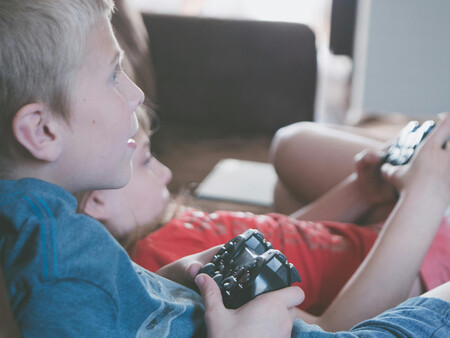
Furthermore, the attention is no longer the same. Now there are worries, work, fatigue and external distractions that were not present before. The result is not that the game has lost its magic. It’s just that entering that state of mind is no longer so simple.
In Mexico, gaming has changed significantly in recent years; According to data from The CIU, they point out that more than 82% of gamers in the country play from smartphoneswhile playing on consoles became the center of attention of the experience to share space with much faster and more fragmented formats.
That also changes the relationship with video games. Previously, gaming meant sitting for hours in front of a console connected to the television. Currently, much of the consumption occurs in short sessions and mainly from the cell phone.
Playing again is also a form of refuge
This is where everything ends up making sense. Neuroscientist Endel Tulving distinguished between remembering information and reliving experiences. When you think about that game, you are not just remembering levels or mechanics, but afternoons without responsibilities, friends who no longer see each other and a stage where everything seemed simpler. So coming back feels strange.
The game is still there, the moment is not. The psychology of memory makes it clear that remembering is not the same as reliving. According to Encyclopaedia Britannica, memory does not reproduce the past like an intact archive. It rebuilds it constantly.
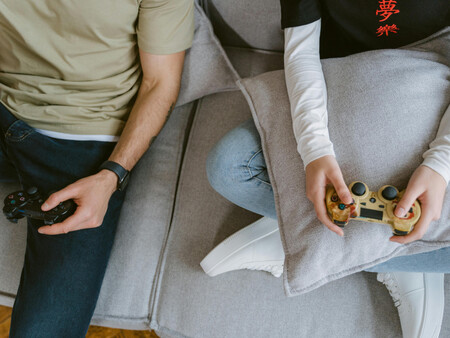
That means that the game you remember does not exist as you have in your head either. It is a version filtered by time, emotions and nostalgia.
Published research, such as in Journal of Computer-Mediated Communicationthey point out that Many people return to old video games not only for entertainment, but for the emotional connection they represent.
Because those titles ended up associated with an unrepeatable stage in their lives. And maybe that’s why coming back never feels exactly the same. Not because the game has changed too much, but because the person has too.
In Xataka Mexico | According to psychology, adults between 30 and 40 who still play video games are building something they won’t see until they are 70
In Xataka Mexico | Psychology says that if you were born in the 80s and 90s and still play video games after 30, immaturity is not to blame

