


GENERATING AUDIO…
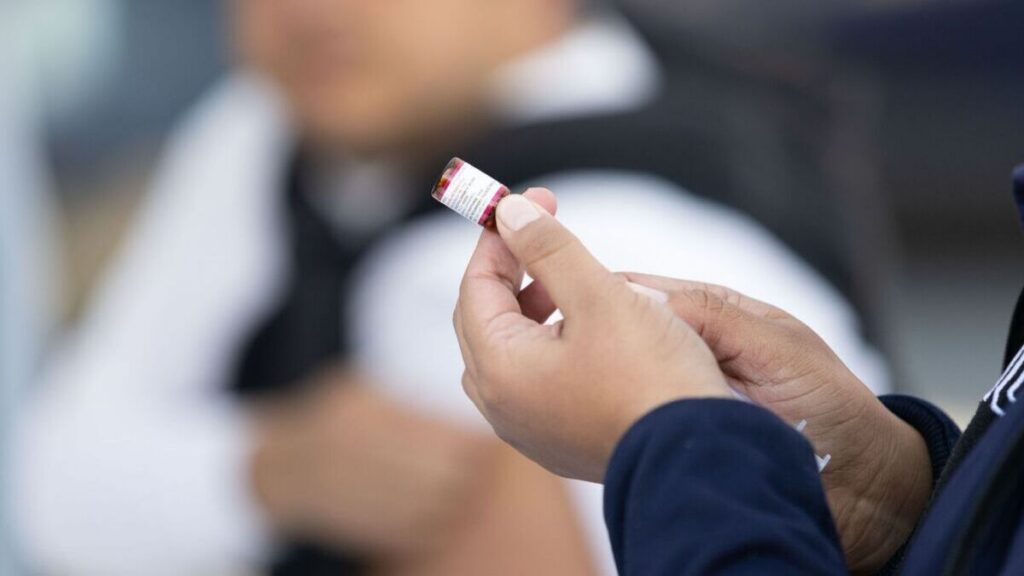
Mexico reports 2,919 cases of measles confirmed so far in 2026; Jalisco leads the outbreak with 1,701 cases, followed by Chiapas (296) and Mexico City (170), according to the daily report of the Ministry of Health, ending February 12. The health situation has led to multiple questions from social media users.
The measles vaccination is the main topic of conversation among Internet users, according to Google Trendsa search engine platform that measures trends. Therefore, we present to you 10 frequently asked questions about this disease.
1. What is measles and how is it spread?
He measles It is one of the most contagious diseases on the planet and is transmitted by contact with nasal secretions ofaryngeal in the form of invisible droplets that come out of the nose and mouth of infected people through coughs or sneezes.
Also for breathing the same air as an infected person, reported the Ministry of Health.
And he highlighted that a infected person can infect up to 18 other people. Additionally, the virus can remain active and contagious in the air or on contaminated surfaces for up to two hours.
He also clarified that, although it is usually related to childhood, specialists warn that Adolescents and adults without complete vaccination can also get sick.
For its part, the Centers for Disease Control and Prevention (CDC) in the United States added that “If you have measles, up to 90% of the people around you who do not have immunity will become infected.”.
“You can spread measles to others from 4 days before the rash appears to 4 days after it appears.”
CDC
2. What vaccines are given in Mexico and when?
The Mexican Ministry of Health explained that there are two types of vaccine to protect against measles in the country:
Triple viral vaccine (MMR):
- It is applied in childhood as part of the basic scheme
- Protects against measles, rubella and mumps
Double viral vaccine (SR):
- Aimed at adolescents and adults
- Recommended for those who have not received the vaccine or are not sure if they have received it
3. Can you get measles twice?
“The answer is no. If you get measles, you should have lifelong immunity afterward.”according to the National Center for Immunization Research and Surveillance of Vaccine Preventable Diseases, in Australia.
Although the Mayo Clinic website in the United States clarified that in the case of vaccines the scenario is differenta person with his complete scheme yes you can get sick, although it is rare and generally presents milder symptoms and a better outcome.
“In this small number of people, symptoms tend to be mild”clarified the Clinic.
The measles vaccinewhich is given in two doses, prevents measles in a 97% of cases on averagehe added.
Furthermore, the measles vaccine (MRS-Measles, Rubella and Parotitis) remains the most effective tool to prevent the disease.
4. What are the first symptoms of measles?
Measles is known to cause a rash with red spots. However, the Mexican Social Security Institute (IMSS) explained all the symptoms that a patient may present.
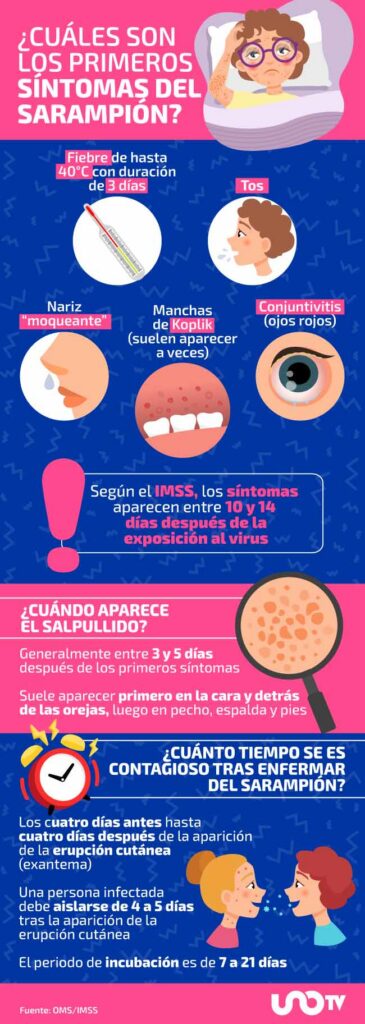
The IMSS highlighted that the The first typical symptom is the appearance of fever.for at least three days, cough, “runny” nose and conjunctivitis (red eyes).
“Fever can reach 40°C and in patients with a weakened defense system, pneumonia can develop”highlighted the IMSS on its website.
Signs and symptoms appear 10 to 14 days after exposure to the virus.
Other measles symptom are the Koplik spotssmall white dots inside the mouth.
The IMSS also reported that the patient must be isolated for at least 4 to 5 days after the rash appears (rash).
The National Autonomous University of Mexico (UNAM) recommended to the population under 50 years of age apply the measles vaccine to reduce the risk of contagion, given the increase in cases registered in Mexico and other countries.
In the case of people over 50 yearsthe vaccine is generally not required, since they were exposed to the virus when its circulation was very high and most developed natural immunity.
If the person does not remember getting sick with measles, authorities recommend checking the vaccination record or asking family members about their medical history.
There is also a laboratory test that helps detect antibodieswhich allows us to know if a person developed immunity, either by having suffered from the disease or by vaccination.
The site of Stanford Medicine explained that the“immune system generates specific defenses called antibodies IgM and IgG, whose presence helps to interpret the protection status”.
In general, this type of tests can detect:
- IgM antibodies, may indicate an active or recent infection
- IgG antibodies, They usually indicate prior immunity or vaccination
In the case of measles:
- If IgM appears, it could be an ongoing infection
- If IgG appear, usually means the person is immune or had the disease before
This type of studies is carried out in clinical laboratories and Its cost may vary depending on the establishment.
7. Who should be vaccinated against measles?
Samuel Ponce de León Rosales, coordinator of the UNAM University Research Program on Epidemiological and Emerging Risks, recommended that all people under 50 years of age who are not sure if they have received two doses of the triple viral vaccine (measles, rubella and mumps) should apply an additional dose as a protective measure.
8. Who should not be vaccinated against measles?
The Mexican Association of Vaccinology specified that, although the biological is safe and highly effective, there are specific contraindications in which it should not be applied.
“Knowing the contradictions of the vaccine allows us to protect the population without generating misinformation”highlighted the association through social networks.
The measles vaccine is not recommended for the following groups:
- pregnant: the MMR vaccine should not be applied during pregnancysince it is a live attenuated virus vaccine
- People with severe immunosuppression: patients with cancer in chemotherapy, transplantsprimary immunodeficiencies or intense immunosuppressive treatment
- History of severe allergic reaction (anaphylaxis): to a previous dose of SRP or any of its components
- Moderate or severe acute illness: in these cases vaccination should be postponed, not permanently suspended
9. I’m not sure if I have the measles vaccine?
The National Autonomous University of Mexico (UNAM) highlighted that:
- If there are doubts about the personal vaccination schedulea review is recommended. But it is safe to give a vaccine booster.
- If you have the complete vaccination schedulethe risk is low and no reinforcement needed.
10. Can face masks prevent infection?
He Dr. Alejandro Macíasinfectious disease specialist and professor at the University of Guanajuato, recognized that the use of face masks does not 100% prevent the spread of measles and ruled out that school closures be an effective measure to control an outbreak in Mexico.
In an interview for UnoTV, he assured that the most viable solution to the rebound is a mass vaccination to recover herd immunity.

