


From next week the winners will begin to be known with the Nobel Prize for this year’s edition. Although there are many predictions found on the Internet, the Clairivate Analytics firm presented its prognosis of the most optional in several of the categories.
For the beginning of the awards, the category that will mark the course of the week is that of Medicine, one of the most important over the years due to inventions and advances made people’s health; This award recognizes discoveries every year that has transformed the understanding of vital processes and human diseases.
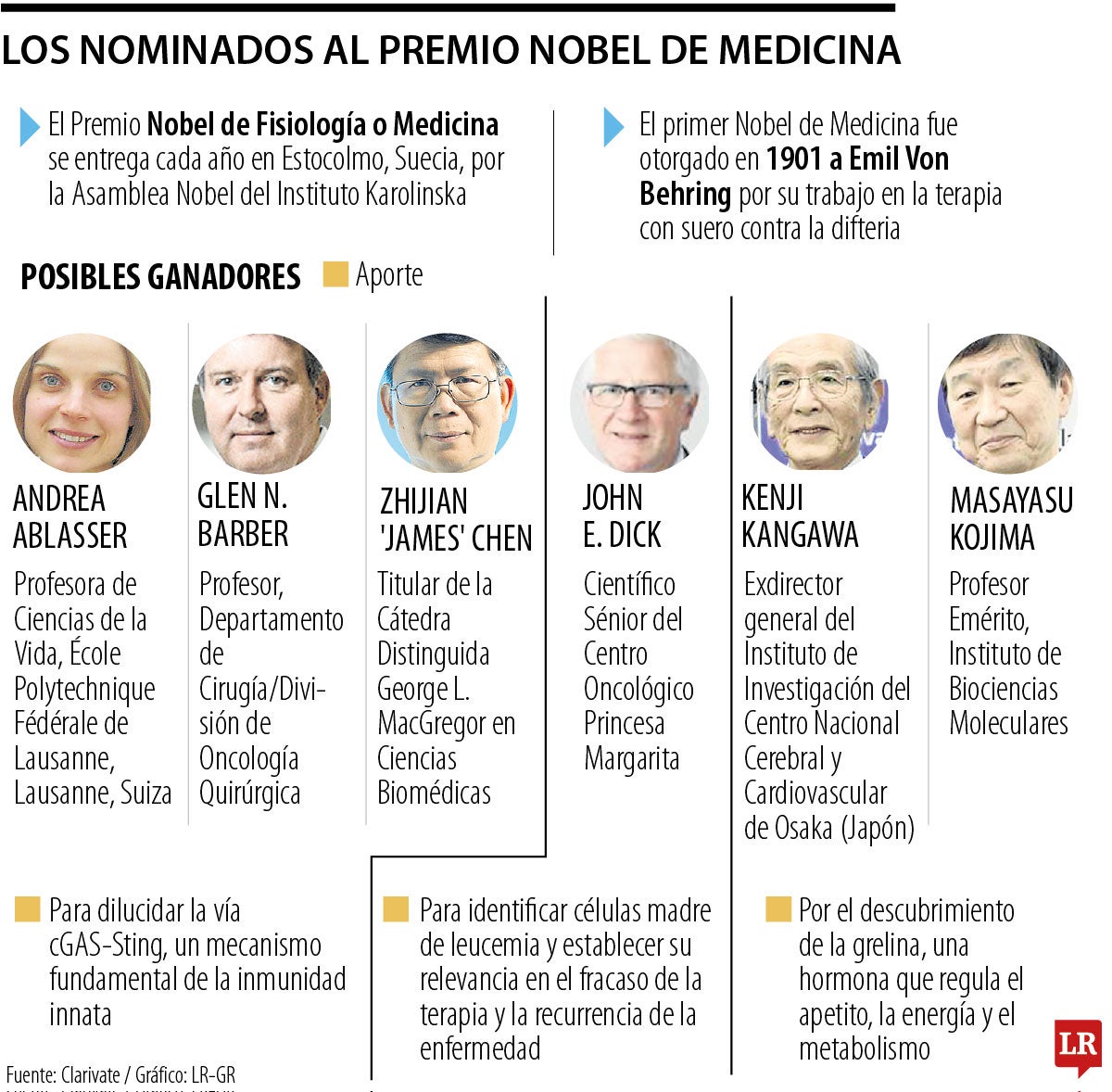
Thanks to the report presented by Clarivate, some clues have been revealed from those who could take the prize this year. Among those options for this award, which have worked around innate immunity are Professor Andrea Ablasser, of the Federal Polytechnic School of Lausana, Professor Glen N. Barber, of the State University of Ohio, and the scientist Zhijian Chen, from the University of Texas Southwestern and researcher at the Hoghes medical institutewhich concentrate their research in explaining the CGAS-sting route, a crucial innate immunity system that detects DNA in the cytoplasm, activating an immune response that includes the production of interferon and other cytokines to combat pathogens and tumors. These contributions have allowed the basis for the development of new therapeutic strategies against autoimmune diseases.
On the other hand, is the researcher John E. Dick, professor at the University of Toronto, who identified the stem cells of leukemia and demonstrated his role in the recurrence of the disease and in the failure of conventional treatments; These findings modified the cancer research approach as it evidenced that not all tumor cells have the same regeneration potential, which opened the way for more specific therapies aimed at cells.
Finally, within the candidates to take the Medicine Prize this year are the Japanese scientists Kenji Kangawa and Masayasu Kojima who were responsible for the discovery of the Grelina, a hormone that regulates appetite, metabolism and energy balance. This finding allowed better to understand the biological mechanisms that control hunger and energy expenditure, which allows to design potential treatments against obesity, metabolic disorders and other pathologies related to the endocrine system.
(tagstotranslate) Construction
Source link

