


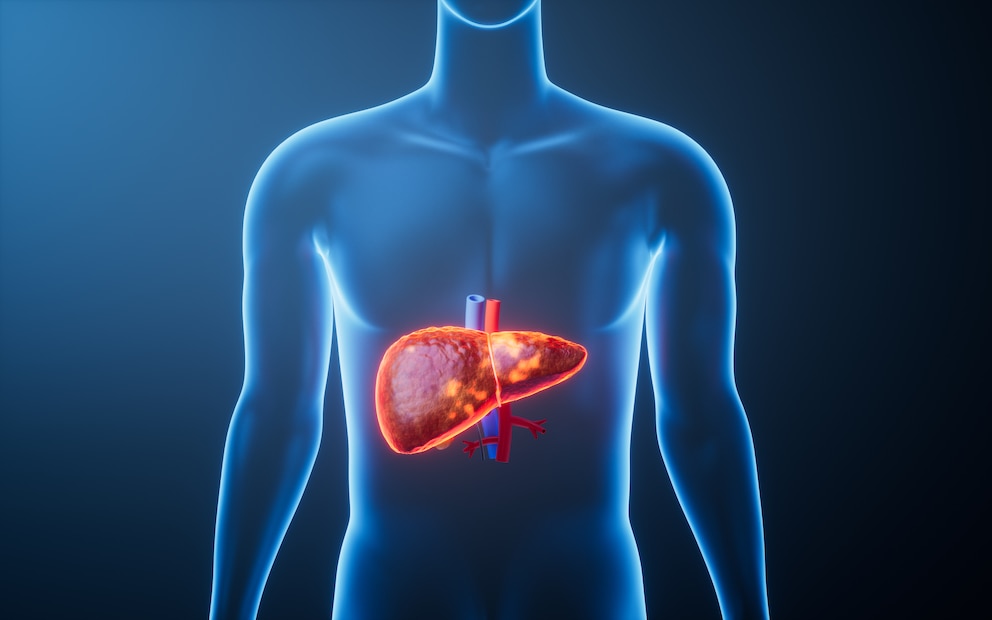
The accumulation of fat in the liver It affects millions of people in the world and represents one of the main challenges for public health globally.
Given the need to find new treatments to combat it, recent research has shown that certain types of omega-3 can help prevent liver damage in people who already have fatty livera condition that increases the risk of developing serious diseases such as cirrhosis.
According to publications collected by ScienceDaily and Nature, they have been the EPA and DHA fatty acids, present in fish oil supplements (omega 3)which have shown positive effects by reducing inflammation and limiting the progression of damage to liver tissue.
Specialists consulted by Mayo Clinic and data published in PubMed they maintain that the supplementation with these specific types of omega-3 is emerging as a support strategy in the management of fatty liveralways under medical supervision.

As we mentioned, recent scientific research suggests that omega-3 fatty acids most recommended for people with fatty liver and for the prevention of liver damage and cirrhosis are the eicosapentaenoic acid (EPA) and docosahexaenoic acid (DHA).
These are mainly found in fish oil supplements either krill oil. Scientific evidence published in scientific journals such as ScienceDaily and Nature reveals the following:
- A 2023 study highlights that DHA-containing lysophospholipids may protect the liver of excess fat and prevent nonalcoholic fatty liver disease (NAFLD).
- A 2024 systematic review shows that supplementation with omega-3 (EPA and DHA) reduce liver enzymes and improve lipid profile in people with fatty liver, although the direct impact on liver fat is still unclear.
- Data from the UK Biobank indicate that the use of omega-3 is associated with a lower risk of developing liver diseasesincluding cirrhosis, especially in women and people with a genetic predisposition.
- Other research showed that omega-3 They can attenuate liver fibrosis, one of the steps prior to cirrhosis.
The omega-3 dosage recommended to obtain benefits in the liver health They vary according to scientific evidence and clinical context.
The main guidelines and studies on fatty liver and liver protection point out the following:
- Suggested dosage from clinical studies: Between 1,000 and 4,000 mg (1 to 4 grams) daily Omega-3 (EPA+DHA combined) have shown positive effects in reducing liver fat, improving liver enzymes and reducing inflammation.
- Most trials have been conducted with doses between 2 and 4 grams per day.
- Medical societies and international consensus: They recommend at least 2 grams daily of EPA+DHA for people with nonalcoholic fatty liver, under medical supervision.
- Important considerations:
- The exact dosage should be individualized based on health status, other medical conditions, and type of supplement.
- High doses (more than 3 grams daily) may increase the risk of bleeding in people who take anticoagulants or have bleeding disorders.
- Self-medication is not recommended nor exceed 4 grams daily without medical supervision.

Before starting any supplementation, it is essential to consult with a specialist doctor, who will adjust the dose and duration according to the particular case.
Consult a hepatologist or family doctor before starting any supplement to adjust the dose in a safe and personalized manner.

