


Technology is in everything and artificial intelligence is already beginning to be found even in washing machines, however, what I am going to talk to you about today is something very different, from Overland AI.
In the competitive world of defense technologies, few announcements generate as much expectation as the one Overland AI announced a few days ago. The company has become the first company specialized in terrestrial autonomy in obtaining a direct production contract with the United States Army.
This new product represents a real leap towards a new way of operating on the battlefield, where vehicles will be able to make decisions on their own without constantly depending on a human operator.
Until now, most unmanned systems used by the US military operated primarily under remote control or teleoperation. This implied important limitations: a single soldier could drive one vehicle at a time and any interruption in communications put the entire operation at risk. With this new contract, Overland AI begins to change that reality for the Marine Corps.
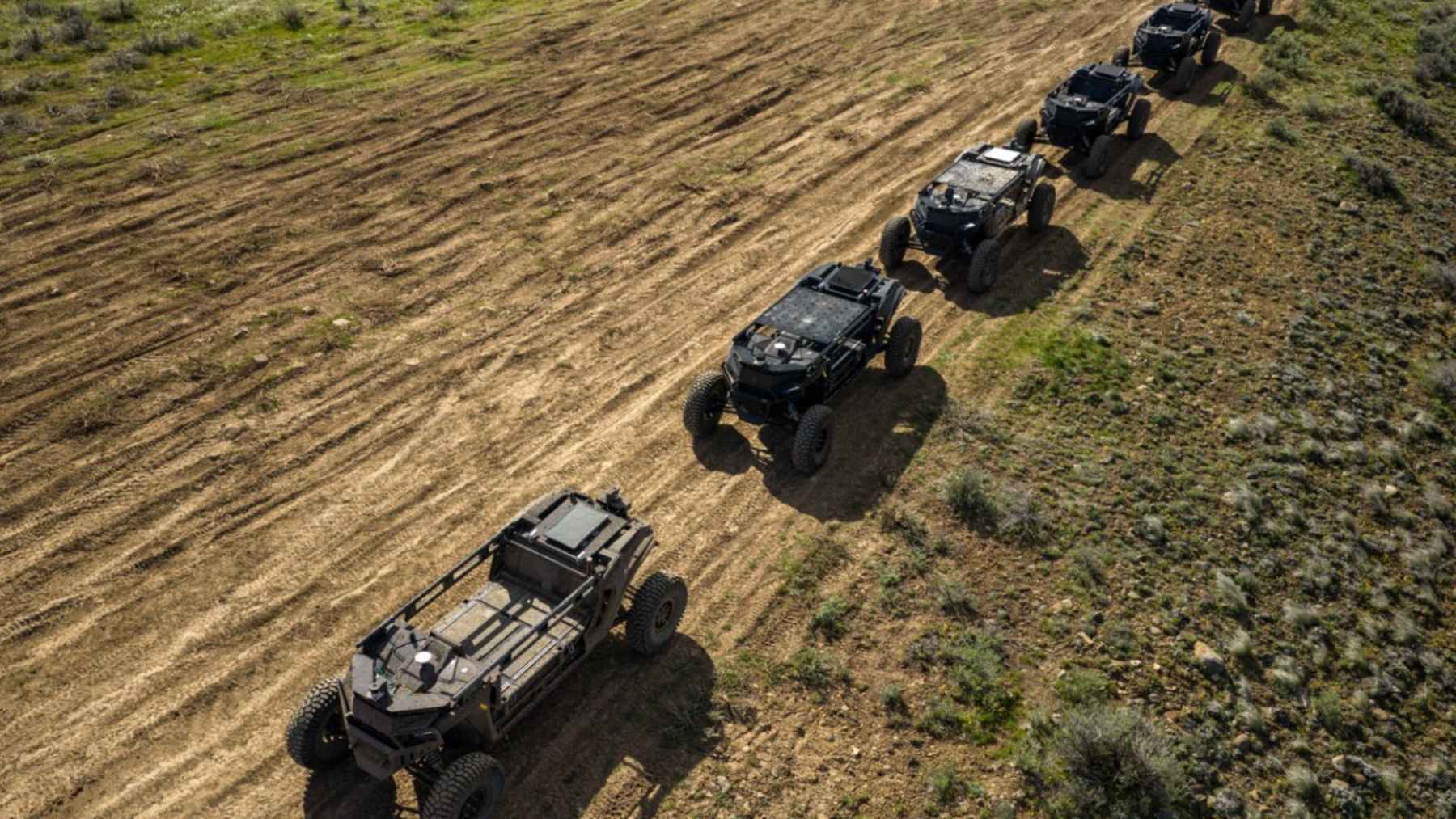
The contract that accelerates innovation thanks to Overland AI
Through the program APFIT (Accelerate the Procurement and Fielding of Innovative Technologies), managed by the Office of the Under Secretary of War for Research and Engineering, Overland AI received an OTA production agreement. This will be developed in collaboration with the Program Manager Ground Based Air Defense (PM GBAD) of the Marine Corps, with the aim of manufacturing autonomous vehicles that integrate into the Marine Air Defense Integrated System (MADIS).
This agreement is the first step toward incorporating fully autonomous ground vehicles on a large scale into official Marine Corps programs. Sector experts see this movement as a clear sign that the armed forces no longer want to just experiment; They want to deploy autonomous vehicles operationally and they want it now.
More autonomy and greater lethality for the Marines
From the military side, Joe Klocek, Program Manager of Ground Based Air Defense, highlighted the practical advantages that this technology will bring: “We hope to incorporate Overland AI capabilities into the Marine Corps’ Ground Air Defense portfolio. By combining these autonomous platforms with our MADIS system, we will considerably extend the operational range and lethality of our air defense units.”
The integration of these autonomous vehicles not only frees Marines from the limitations of teleoperation, but allows for safer and more efficient operations. A vehicle that can navigate, make decisions and execute missions independently multiplies the potential of units, especially in complex scenarios where maintaining stable communications is difficult.
What makes this announcement especially relevant is that it reflects a deeper evolution within the War Department. After years of testing and discussions, authorities are moving from the experimental phase to actual implementation. PM GBAD is setting the pace by bringing proven autonomous capabilities directly into the hands of Marines.

