


The Mother-in-law’s Tonguealso known as Sansevieria or Sword of Saint George, has established itself as one of the favorite indoor plants in the universe deco. And the truth is that it is no coincidence: in addition to being a plant that we already saw in our grandmothers’ houses, (with all the connotations that this has on a sentimental level) its appearance exotic, minimalist and its long, sharp leaves make it the ideal piece to give a touch of design and elegance to any corner, from the living room to the bathroom.
In addition to being a style icon, this plant is super resistant and air purifier. But even the most feisty plants need a little push to look truly impeccable and with that vibrant green that stylizes the house so much. And the secret to achieving this is not in any expensive gardening product, but in an ingredient that we all have in the kitchen: white vinegar.

The three reasons to use vinegar
As we well know, vinegar is not just a kitchen seasoning. Its acidic properties make it a powerful ally not only for cleaning at home, but also for plant maintenance.
- Enhances color and growth: The acidic composition of vinegar helps balance the pH of the substrate. This is key, as it makes it easier for Sansevieria absorb essential nutrients such as iron and magnesium. The result? a foliage healthy, strong and with that deep green What we want for our decoration.
- Stop pests: Vinegar acts as a natural repellent and ecological. If you detect small insects that threaten your plant, the vinegar solution will help you keep them at bay, keeping it pristine.
- Clean substrate: Thanks to its antimicrobial properties, vinegar helps to slightly disinfect the substrate, preventing the proliferation of bacteria that could weaken the roots. A care gesture that ensures the longevity of your plant top.
How to apply vinegar to your mother-in-law’s tongue
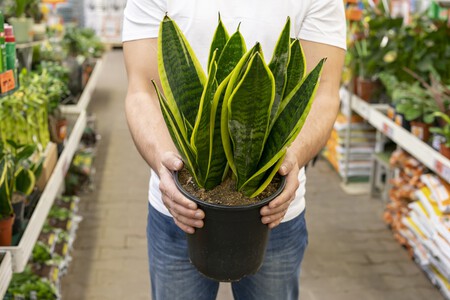
Applying this treatment is very easy since it is simple and quick to do, as long as it is done well and without overdoing it:
- The mix: In a sprayer, mix one part white vinegar (with a concentration of 5-6% acetic acid, the kitchen standard) with three parts of water. This amount is very important so that the use of vinegar is not counterproductive.
- The application: Use it to water the plant only once a month during the growing months of spring and summer.
- Style Tip: If you want to spray the leaves, do it early in the morning or late in the afternoon. Contact of vinegar with direct sun could burn the leaves.
Warning: As with any home trick, moderation is key. Therefore, it is important to always observe your plant’s response. If you notice yellowing or wilted leaves, reduce the frequency of watering with vinegar. Furthermore, it is important not to apply vinegar in excess, since can burn the roots and seriously upset the balance of the substratekilling beneficial microorganisms.
Photographs | Freepik, Freepik
In Decosphere | The plant that can even grow in a yogurt container and bears fruit all year round
In Decosphere | Four houseplants that people with smelly houses use to scent them naturally
In Decosphere | Seven perfect plants to decorate dark hallways: they are beautiful and need little light

