


International researchers made a discovery which calls into question the classical theory of origin of the Moon. According to this renewed approach, the collision that generated the natural satellite was not the product of a random encounter, but of bodies formed in the same region of the protoplanetary disk.
The discovery, based on geochemical analyzes and planetary formation models, suggests that the composition of the Earth and precursor object of the Moon shares common origins. This would explain coincidences in key elements and forces us to rethink chronologies and mechanisms at the dawn of the solar system.
New analyzes could change the origins of the Moon
The studies compared abundances of metals and isotopes in terrestrial samples and in records from the Moon, and proposed that many of the blocks that built both bodies came from the interior of the solar system. The result is consistent with scenarios where neighboring planetesimals converge and collide after a stage of migrations and local mixing.
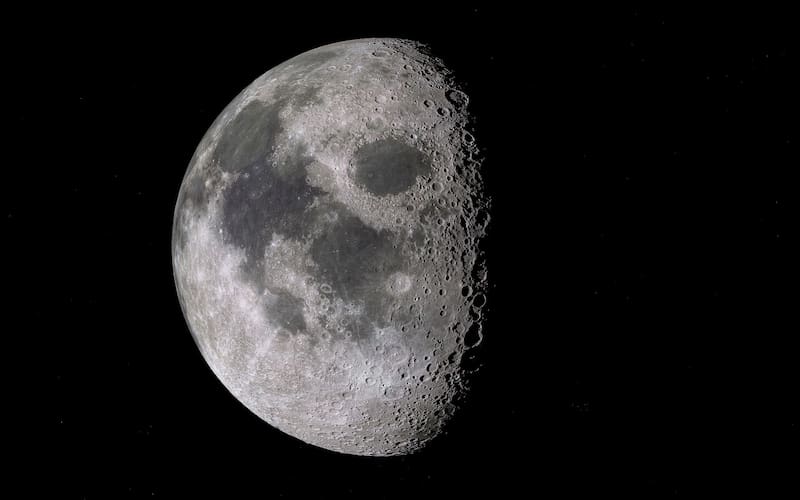
This approach offers a more organized explanation of why Moon and Earth show chemical similarities which the casual impact theory had difficulty justifying. It also implies that the training was not a single isolated event but part of a broader regional process.
The discovery would change planetary history
If the new model is confirmed, textbooks on planetary formation will need to be updated: the genesis of the Moon would become a chapter in a collective process of accretion and redistribution of material in the Earth’s orbital neighborhood, not just the consequence of an accidental collision.
The reinterpretation It also affects how we understand the early evolution of the Earth (its mass, mantle, and iron distribution) and raises questions about the frequency of similar events in other observable planetary systems.
Controversy and further checks on this theory
The scientific community welcomes the study with interest, although it warns that there are still pieces to solve: it is necessary to expand the samples, refine dynamic models and reconcile discrepancies in isotopic data. The active discussion is healthy and will mark the next sampling and simulation campaigns.
In the short term, researchers plan new measurements and simulations to contrast the regional scenario against the classic random impact. If confirmed, the discovery will rewrite entire chapters on the origin of the Moon and the development of the solar system.

