


If today we tell you that Bill Gates was, at the time, the biggest evangelist of the Macyou’d probably think it’s an out-of-date joke. We are used to seeing Microsoft and Apple as two giants condemned to reluctantly understand each other. But there was a day, specifically in nNovember 1984in which the founder of Windows not only supported Apple: he was the one who best sold his vision.
It was 1984. Apple had just launched the original Macintosh earlier in the year and had spent a fortune on that dystopian Ridley Scott ad whereThe enemy had a name and surname: IBM. In Cupertino they were so obsessed with taking down “Big Blue” that they didn’t know how to see the whole board. The real threat was not in the IBM offices, but brewing at Microsoft.
Microsoft became the best ally of the first Mac
In a BusinessWeek cover story that November, Bill Gates said:
The next generation of interesting software will be made on the Macintosh, not the IBM PC.
Read today it seems impossible. But at that moment, Microsoft was not the operating system giant we knowbut one of the most important developers for Mac. In fact, almost half of his income at that time came from selling software for the apple.

Bill Gateswith a pragmatism that was sometimes lacking in Cupertino, understood the potential of the graphical interface before anyone else. He opted for the mouse and windows when the rest of the world was still typing commands in green phosphorus. He needed the Mac to work because his best products lived there. In fact, the legendary Excel first debuted on Mac in 1985, before making the leap to Windows.
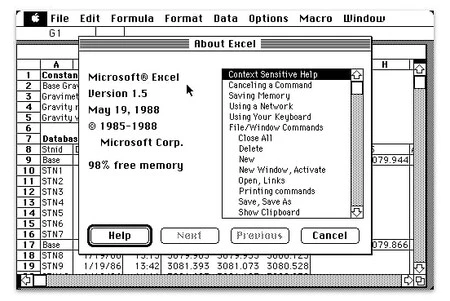
The agreement that delivered the Mac interface to Microsoft
The story got complicated shortly after. After the departure of Steve Jobs in 1985, John Sculley, trying to ensure that Microsoft continued developing software for the platform, signed an agreement that would define the future of both companies. It granted Microsoft a “perpetual, worldwide, royalty-free” license to use Mac visuals on your future systems.
Basically, Apple gave him the keys to the design of interface to whom, just a year before, he gave them their ears. What followed was a slow agony for Apple and a meteoric rise for its rival.
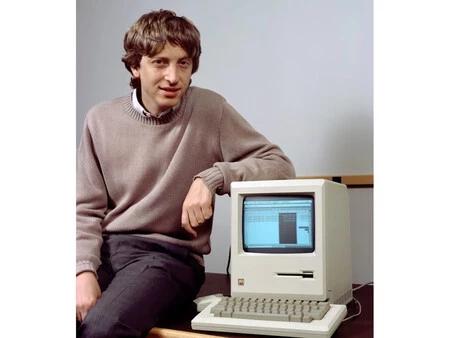
Apple tried to stop bleeding into the courts, suing Microsoft in 1988 for copying its “look and feel.” But the court, in 1994, rejected Apple’s final appeal. That paper signed by Sculley shielded Microsoft.
While Apple’s lawyers were losing in the offices, Microsoft was winning in the stores. The release of Windows 95 was the final blow: In just one year they sold 40 million copies, compared to the mere 4.5 million Macs that Apple managed to sell in the same period. The difference was almost 10 to 1.
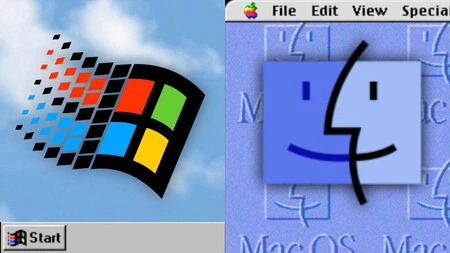
The day Bill Gates rescued Apple
By 1996, Apple was no longer a rival, but a “besieged” company which accumulated a billion in losses and laid off 3,800 employees. The company was 90 days away from bankruptcy.
It is impossible to understand today’s Apple without that context of desperation. That is why the image of the 1997 Macworld is so powerful, with a Steve Jobs just returned swallowing his pride to announce that Bill Gates was investing $150 million to keep the company afloat.

Internet Explorer on Mac OS X as part of that agreement
Internet Explorer on Mac OS as part of that agreement
Without that injection of capital, and without Microsoft’s commitment to keeping Office on Mac for five more years (in addition to establishing Internet Explorer as the default browser in Mac OS), today we would perhaps not talk about the iPhone, the iPad or the chips of the Apple Silicon family.
In the end, Gates was right in 1984: the Mac was the future. The paradox is that it was Microsoft that ended up financing the survival of that future. In exchange, yes, for taking a good part of the graphical interface along the way.
In Applesfera | The 11 books that taught Steve Jobs how to lead and turn Apple into the company it is today
In Applesfera | New foldable iPhone – Everything we think we know about it

