

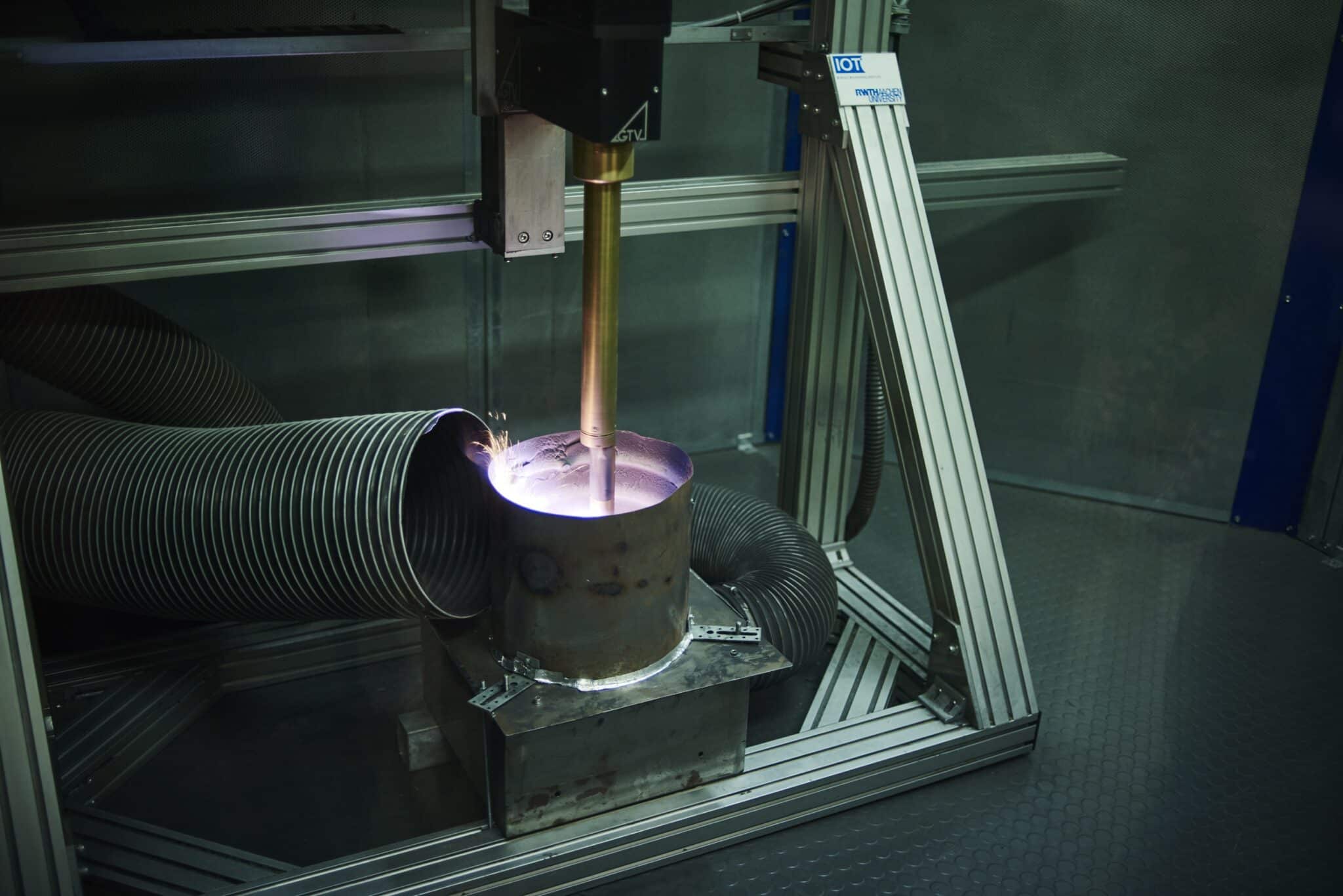
Researchers of the Korea Institute of Geosciences and Mineral Resources (KIGAM) have found a very ingenious solution for one of the most common and complicated waste to manage: wet coffee grounds. They have developed a process based on plasma that transforms them directly into a biochar High performance, without the need for prior drying. The result is a material with an energy power comparable to that of anthracite coal and that is obtained in less than two minutes.
The innovation not only solves a persistent technical problem in biomass utilization, but could reduce waste disposal costs and open new avenues for decentralized waste-to-energy systems.
Humidity, from obstacle to driver of the process
For a long time, the high water content in organic waste has been a brake on its energy transformation. Most existing technologies require prior drying, which makes the entire process more expensive and slows down.
The plasma flame pyrolysis system developed at KIGAM eliminates that step. It operates with plasma flames generated by the combustion of liquefied petroleum gas and compressed air, which reach temperatures between approximately 1,470 and 1,650 °F (898 degrees Celsius). This allows the wet biomass to be treated as it arrives.
The most interesting thing is that humidity, far from complicating things, becomes the protagonist. The water trapped in the coffee particles vaporizes very quickly, generating internal pressure and causing microscopic explosions. Researchers describe it as popcorn effect. These ruptures break down the structure of the material, increase its porosity and accelerate carbonization. Under optimized conditions, full conversion is achieved in just 90 seconds.
A biochar that competes with anthracite and opens other doors
The resulting biochar reaches a heating value of 29.0 MJ/kg33% higher than untreated coffee grounds. Its energy behavior is similar to that of anthracite coal. Furthermore, the fixed carbon content almost triples, going from 15.6% to 46.2%. Another key benefit: sulfur compounds completely disappear, which prevents sulfur dioxide emissions when burning.
Record speed and lower energy consumption
Hydrothermal carbonization systems typically require between one and six hours to process biomass, and torrefaction can take 30 minutes or more. Plasma flame pyrolysis completes the transformation in less than two minutes.
Although the study has focused on coffee grounds, the team considers that the same technology could be applied to other waste with high humidity, such as food waste, sewage sludge or agricultural waste.
The study has been published in the journal Chemical Engineering Journal.

