


- Diabetic Nephropathy, the silent disease that threatens and advances without warning
- Take care of your health today to avoid consequences tomorrow
Within the framework of World Diabetes Day which took place yesterday, November 14, the Institute of Security and Social Services of State Workers, ISSSTEannounced through their social networks one of the slower diseases but lethal ones that are destroying humanity.
Kidney disease associated with diabetes It progresses slowly and, in most cases, without visible signs until advanced stages. However, it causes such common symptoms as headache, fatigue and itchy skin.

It is about the Diabetic Nephropathy. This condition, which can begin “years before symptoms appear,” indicates the Institute of Security and Social Services of State Workers, ISSSTEis putting the lives of more Mexicans at risk, especially those with uncontrolled diabetes or high blood pressure.
Diabetic Nephropathy, the silent disease that threatens and advances without warning
The specialists of ISSSTE They explain that the kidneys can show signs when they are already “tired,” such as “constant fatigue or weakness, nausea or vomiting, and swelling in the legs or feet,” which makes early detection more difficult.
Among the symptoms that may also appear are discomfort that is confused with minor problems, such as “lack of appetite, itchy or dry skin, and difficulty breathing”, highlighted the ISSSTE, which is why they are usually ignored on a day-to-day basis.
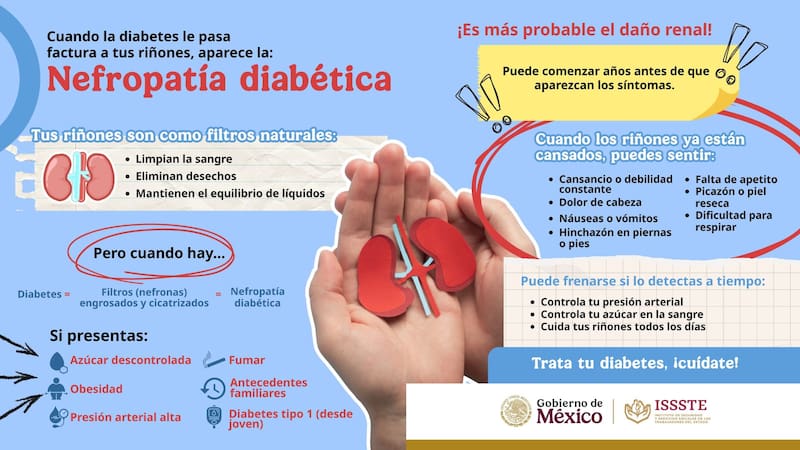
Attention if you present the following symptoms and have these habits:
- Uncontrolled sugar
- high blood pressure
- Obesity
- Smoke
- Family history
- Type 1 diabetes from a young age
Kidney damage can be stopped if action is taken in time. He ISSSTE insists: “Control your blood pressure, control your blood sugar and take care of your kidneys every day,” recommendations that reduce the risk of permanent damage.
Take care of your health today to avoid consequences tomorrow
The institution remembers that “your kidneys are like natural filters“and that their function is essential: they clean the blood, eliminate waste and maintain fluid balance. When diabetes affects these filters, scars appear that can lead to kidney failure.
The call is clear: treating diabetes is not just controlling sugar, it is protecting the organs that sustain life. “Diabetic nephropathy is not a game“, warns the ISSSTE, so going to check-ups, performing urine tests and seeking emotional or family support can avoid complications.

