


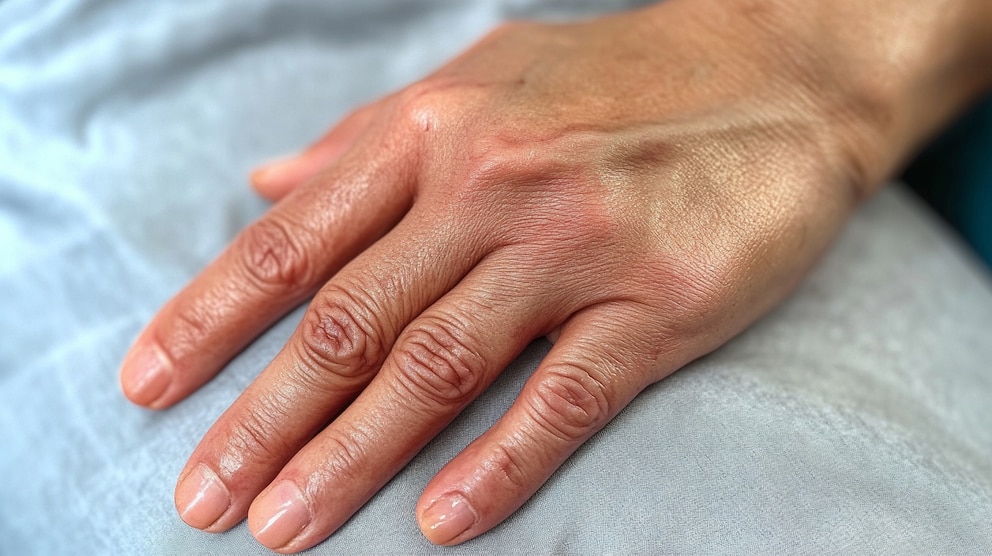
Feel pain in the fingers of the hands It can alter everything from simple activities to more complex tasks, affecting people of any age. According to Stanford Medicine Children’s Health and Sports Lifethis pain has multiple causes and there are ways to prevent and relieve it.
Pain in the fingers is usually caused by diseases such as osteoarthritis, rheumatoid arthritis, tendonitis, tenosynovitis, injuries either nerve compression. Common symptoms include stiffness, swelling, loss of strength, and difficulty moving the fingers.
The hand is a complex anatomical structure composed of 14 phalanges, 5 metacarpals and 8 carpal bones. These elements are linked to muscles and ligaments that allow precision and strength, although they also make the fingers vulnerable to different pathologies.
Most common causes of pain in the fingers
Degeneration of articular cartilage characterizes osteoarthritiswhich causes pain, limited movement, stiffness and the appearance of bone nodules. This disease affects both the tips of the fingers and the base of the thumb.

On the other hand, the rheumatoid arthritis It is an autoimmune condition. It attacks the connective tissue around the joints and tends to cause pain, swelling and risk of deformity, according to Stanford Medicine Children’s Health.
Excessive or repetitive use of the fingers increases the possibility of suffering from tendonitis either tenosynovitisconditions indicated by Sports Life and Stanford Medicine Children’s Health. Additionally, a ligament injury or sprain can cause swelling and discomfort.
Constantly sending messages from mobile devices can overload the tendons of the thumb, generate inflammation and lead to chronic pain, as pointed out Sports Life.
Also highlights the stenosing tenosynovitis or “trigger finger,” which hinders normal extension or flexion of the finger and causes a characteristic clicking sound.

The ganglion cysts They are fluid-filled lumps on the wrist or hand, whose presence is usually accompanied by gradual swelling and mild pain. Stanford Medicine Children’s Health clarifies that they only require treatment if they interfere with the function of the hand.
Finally, compression of the median nerve triggers carpal tunnel syndrome. It is manifested by numbness, pain or a sensation of swelling in the fingers after repeated movements or unnatural positions.
Symptoms, diagnosis and aggravations of pain in the fingers
Finger pain may be associated with stiffness, swelling, numbness, loss of strength, or a feeling of stiffness. Stanford Medicine Children’s Health points out that “Osteoarthritis of the hand can be very painful” and that the stiffness is usually more intense in the morning.
While Sport Life emphasizes that discomfort may be accompanied by redness and difficulty executing precise movements. Clicking or locking when straightening the fingers is typical of “trigger finger,” and hot swelling may indicate arthritis or ligament injuries.
An accurate diagnosis requires specialist evaluationcapable of distinguishing between joint wear, inflammation or injuries. These conditions can share symptoms, making it difficult to identify their exact origin.

It is essential to consult a doctor if pain persists, swelling increases or functional loss is experienced. Only professional assessment allows us to rule out serious pathologies and choose the most appropriate treatment.
Remedies and tips to relieve finger pain
Rest and review of daily habits are essential to relieve discomfort and prevent its progression.according to Sports Life and Stanford Medicine Children’s Health. It is advisable to avoid activities that aggravate pain and modify tools or postures to reduce overload on the fingers.
The use of a splint It can be effective in cases of osteoarthritis or tendinitis, as it limits movement and helps reduce irritation. Applying cold to the area reduces inflammation, while heat helps relax the muscles and calms the sensation of pain.
It is recommended to keep the wrist straight while writing, use ergonomic keyboards, and ensure proper hand posture to prevent repetitive injuries..

Gentle flexion and extension exercises, preferably supervised by a professional, help maintain mobility and strength. Using sponge balls, performing pincer movements between the fingers and frequently varying the posture provide additional benefits.
When pain persists, both sources suggest resorting to nonsteroidal anti-inflammatory drugs (NSAIDs)such as ibuprofen, under medical recommendation. If the discomfort does not resolve, treatment may require injected corticosteroids either surgery to solve structural injuries or release compressed nerves.
Medical control is essential if the pain lasts several days, is accompanied by intense inflammation, weakness or significant functional difficulties. Only a specialist can make the correct diagnosis and propose the best therapeutic strategy.
Practicing exercises designed for the hand and adopting proper posture helps maintain finger function. Consulting a professional in case of persistent discomfort increases the options of preserving the mobility and strength of the hand.

