

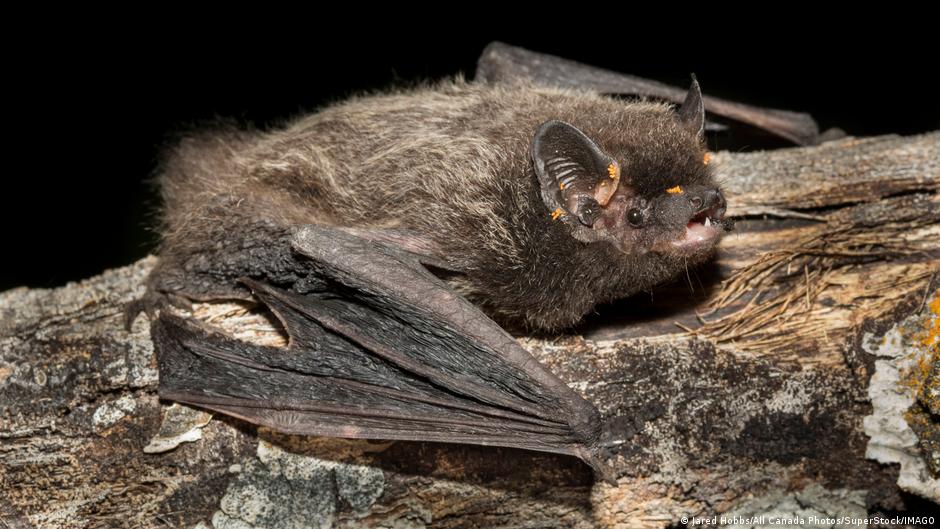
An 11-year-old boy died of rabies in Ontario, Canada, after a seemingly harmless encounter with a bat that landed on his face while he slept at a family cottage.
The case, recently described by Canadian doctors in the scientific journal Canadian Medical Association Journal, has revived warnings about a little-known risk. A person may have been exposed to the virus even without visible bites or scratches.
A bat on your face while you were sleeping
The episode occurred in 2024, when the boy woke up and found a bat on his face. His father managed to trap him in a pot and released him outside. Since the child had no apparent injuries, there was no blood or marks, and the animal did not show any strange behavior, the family did not seek medical attention.
The problem is that risky contact does not always leave visible injuries. According to the report, bat bites can be so small that they go completely unnoticed.
Symptoms that led to the diagnosis of rabies
Almost three weeks later, the child began to suffer tingling, loss of sensation and swelling on the right side of his face. According to The Guardian, He initially received a diagnosis of herpetic gingivostomatitis, but the bat episode led the doctor to consult health authorities.
The next day, the situation deteriorated rapidly. He lost facial sensation, began to slur his words, and developed fever, confusion, and hallucinations. He was admitted to the intensive care unit at McMaster Children’s Hospital in Hamilton, where an MRI revealed injuries to his brain stem. The tests ended up confirming what the medical team already suspected. The boy was angry.
The doctors even raised the possibility of injecting antibodies directly into the child’s brain, but both the family and the healthcare team ruled out the procedure due to its invasive nature and the lack of evidence on its effectiveness. Seventeen days after admission, life support was withdrawn and the minor died surrounded by his family.
Post-exposure prophylaxis, key to preventing rabies
Rabies is among the most deadly infections and, when it produces symptoms, it almost never leaves room for survival. However, infection can be prevented if post-exposure prophylaxis, a treatment that combines antibodies and vaccines, is administered in time.
According to Guardianthis treatment has shown very high efficacy in some 29 million treatments administered. Therefore, the authors of the report insist that early detection and immediate administration of prophylaxis remain the only effective measures to prevent rabies after possible exposure.
Although human rabies is very rare in Canada, this case serves as a reminder that exposure to the virus remains a possibility, albeit a rare one. According to data from the Canadian Government, only 28 human cases have been documented in the country since 1924. Additionally, all human cases recorded in Canada since 1967 were transmitted by bats, with none having been documented involving dogs, raccoons or foxes.
On a global scale, however, the picture is very different. According to the World Health Organization, 99% of human rabies infections originate after a dog bite.
Why any contact with a bat should be reviewed
Experts remember that contact with bats is especially delicate because their injuries may not be detected. In fact, even direct contact with one of these animals, especially if it appears in a bedroom or comes into contact with a person’s face, can be considered a risky situation.
In short, for the authors of the report, any direct contact with a bat justifies consulting a health professional, even if there is no visible wound. The absence of blood or a visible wound does not rule out possible exposure to the virus.

